Payroll Resilience for Multi-Country Teams
Payroll resilience depends on connected data, local compliance logic, and controlled workflows that keep multi-country pay accurate during change.
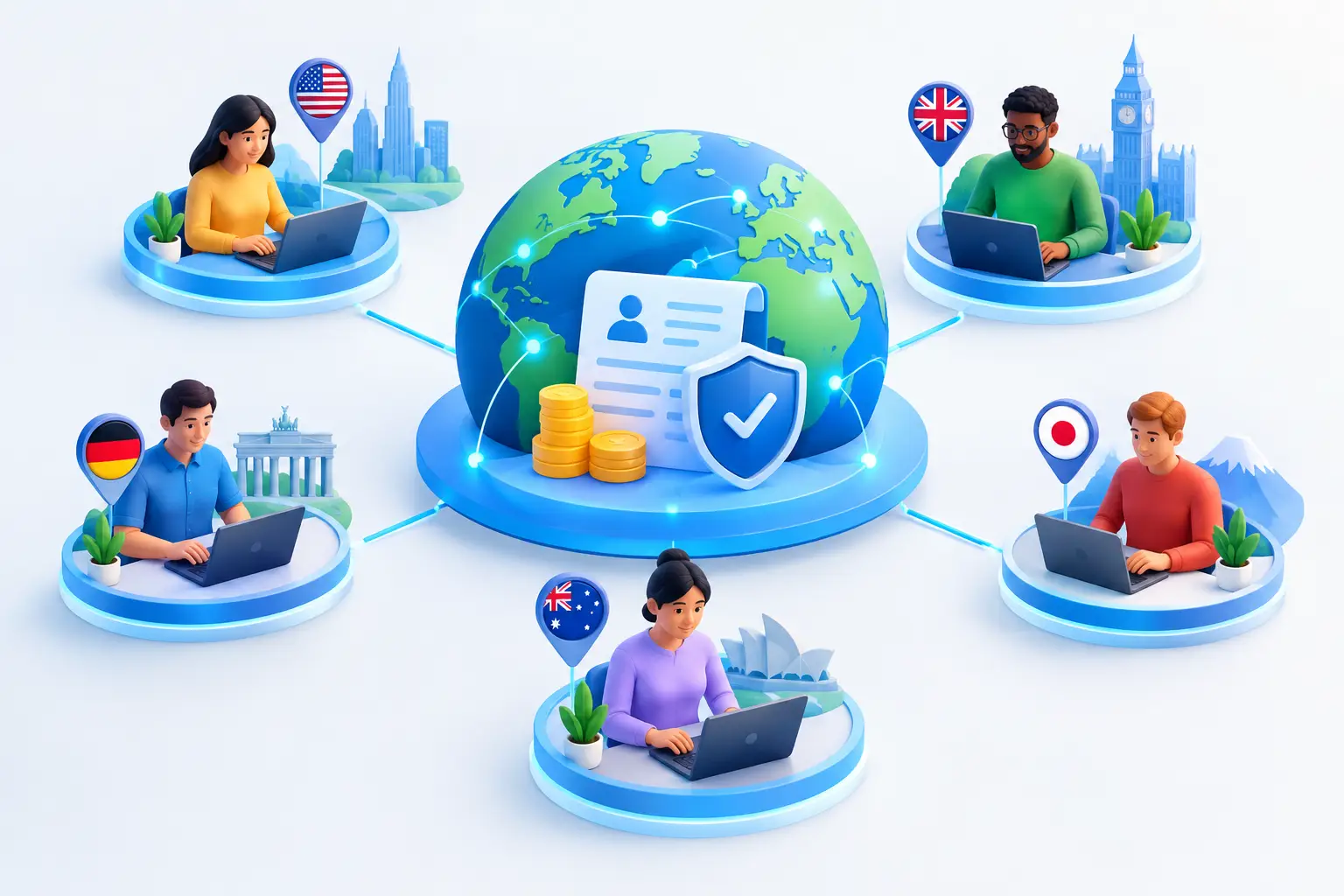
A payroll run can look correct until a new overtime rule, late termination, bank-file rejection, or entity reorganization exposes the gaps behind it. Payroll resilience is the operating capacity to absorb those events without delaying pay, breaking compliance, or forcing payroll teams into uncontrolled manual work.
For organizations operating across Singapore, New Zealand, Hong Kong, Australia, and other APAC markets, this is not simply a payroll-team concern. It is a shared requirement across HR, finance, workforce operations, IT, and compliance. The quality of a payroll result depends on the quality, timing, ownership, and traceability of the workforce data that enters it.
What payroll resilience actually means
Payroll resilience is not synonymous with running payroll on time. A team can meet a pay date while relying on disconnected spreadsheets, unsupported adjustments, and last-minute approvals. That approach may work in a stable month. It becomes expensive when the business adds an entity, changes a pay policy, acquires a team, or faces an audit.
A resilient payroll operation can continue producing accurate gross-to-net results when normal conditions change. It has clear inputs, local statutory logic, controlled exceptions, accountable approvals, and evidence for every material change. It also gives leaders a way to identify a problem before employees see it in their bank accounts.
That distinction matters because payroll is the final calculation in a much larger chain. Job changes affect compensation. Leave and attendance affect earnings. Scheduling and overtime affect pay rates. Benefits and deductions affect net pay. A payroll system cannot compensate indefinitely for incomplete or conflicting upstream data.
Resilience has four operating dimensions
First, payroll needs data integrity. Each worker should have one governed identity and a current record for employment terms, legal entity, location, tax settings, pay components, bank details, and relevant time data. If those records live in separate systems, the business needs reliable synchronization rules and clear ownership when values conflict.
Second, it needs country-specific compliance capability. Multi-country payroll cannot be managed through a single generic rules engine with local variations patched around the edges. Tax, social insurance, statutory leave, reporting, pay calendars, and bank-file requirements differ by jurisdiction. Country packs should make local logic explicit, maintained, testable, and versioned.
Third, it needs operational control. Payroll teams require cutoff calendars, validations, exception queues, approval paths, role-based permissions, and an audit trail. These controls reduce the chance that an urgent correction becomes an invisible change with no accountable owner.
Fourth, it needs recovery capacity. A resilient team knows what happens if a payroll input arrives late, a bank rejects a file, a statutory rule changes close to cutoff, or an integration fails. Recovery is not a spreadsheet stored in one administrator’s folder. It is a documented process with defined decision rights, fallback actions, and post-run reconciliation.
Why fragmented systems weaken payroll resilience
Most payroll failures begin before the payroll calculation. An HRIS may hold the employee’s base salary, a time system may hold overtime, a benefits tool may hold deductions, and a finance spreadsheet may carry cost-center changes. Every handoff creates a timing risk. Every duplicate employee record creates a reconciliation problem.
The issue becomes sharper during organizational change. Consider a manager approving a promotion after payroll cutoff, while finance updates the new cost center in a separate application and the employee begins working a different schedule the same week. Without a shared data model, the payroll team must determine which change is effective, whether it applies retroactively, and whether the result has been validated in every connected system.
Manual work is sometimes necessary, particularly during a country launch or unusual off-cycle payment. The trade-off is not between automation and human judgment. It is between governed exceptions and informal workarounds. A controlled manual adjustment has an owner, reason code, approval, effective date, and audit record. An emailed instruction with a spreadsheet attachment does not.
Build payroll resilience into the operating model
The most effective approach starts by treating payroll as a cross-functional operating process rather than a monthly finance task. HR owns many worker-data events. Workforce operations owns time, schedules, and attendance. Finance owns funding, accounting, and controls. IT owns identity, access, integrations, and security. Payroll needs defined dependencies on all four.
Establish a single worker and organization record
A single source of truth does not require every capability to exist in one screen. It requires one authoritative identity layer and clear data ownership across the architecture. The employee identifier, employing entity, manager, location, compensation basis, and employment status must remain consistent wherever they are used.
This is where composable architecture matters. A platform should support APIs, webhooks, and integration controls without allowing disconnected applications to overwrite authoritative data without review. REST and GraphQL APIs can make data portable, but portability without governance simply moves errors faster.
For sensitive payroll fields, access should follow least-privilege principles. Role-based access control, SAML SSO, and audited permission changes help ensure that HR partners, managers, payroll specialists, and finance users see and act on only what their role requires.
Make country logic a product capability, not tribal knowledge
Payroll teams should not have to remember every statutory exception from memory or maintain local formulas in uncontrolled files. A country-pack model embeds jurisdiction-specific tax and social-insurance rules, reporting requirements, and bank-file formats into the payroll operating layer.
That does not eliminate the need for local expertise. It changes where expertise is applied. Local payroll leaders can focus on interpreting policy changes, reviewing edge cases, and approving outcomes rather than repeatedly rebuilding calculations. When rules change, the organization should know which pay groups, earnings codes, employee populations, and reports are affected.
The right level of standardization depends on the business. A company with independent local entities may retain country-specific approval structures. A centralized shared-services model may standardize validation and sign-off across markets. In both cases, local compliance logic should remain explicit rather than buried in a global template.
Design controls around exceptions, not ideal runs
A clean payroll run is valuable, but it is not the best test of the process. Test the situations most likely to create rework: retroactive salary changes, unpaid leave corrections, new-hire bank details, termination payments, variable compensation, cross-border transfers, and late time submissions.
Teams should define thresholds that trigger review, such as a material variance from prior-period net pay, unusual overtime, negative net pay, missing banking data, or a pay component used outside its intended population. These are not merely error checks. They are decision points that should route to the right reviewer before funds are released.
A practical payroll control framework typically needs at least four layers:
- automated input validations before calculation
- variance analysis between current and prior payroll results
- role-based review and approval of exceptions
- post-payroll reconciliation for funding, journals, filings, and employee outcomes
The value comes from connecting those layers. A variance report is less useful if a reviewer cannot trace it back to the underlying HR event, time entry, policy, or approved adjustment.
AI can improve response time, but governance determines trust
AI has a credible role in payroll resilience when it reduces investigation time without taking uncontrolled actions. An AI agent can identify incomplete employee records, summarize exceptions, surface the source of a pay variance, or prepare a payroll review checklist. Those uses become more valuable when the agent can cite the source data and respect regional controls.
The boundary matters. Payroll decisions affect employee trust, legal compliance, and cash movement. AI should operate with role-based permissions, auditable actions, and clear escalation paths. AI-native, not bolted-on, means governance is part of the system design: source citations, RBAC, data controls, and audit logs are available when the agent acts, not added after deployment.
For example, an agent may flag that overtime has increased materially for one location and trace the change to approved schedule updates. It should not silently alter time data or approve an off-cycle payment. Automation can accelerate detection and preparation; accountable people should retain authority for consequential decisions.
Measure whether your payroll operation can withstand change
On-time payroll is necessary but incomplete. Leadership should also measure the operational signals that show whether payroll can withstand pressure. Useful indicators include the percentage of payroll inputs received after cutoff, manual adjustments per pay cycle, exception aging, retroactive corrections, bank-file rejection rates, payroll-to-general-ledger reconciliation time, and unresolved compliance changes.
These measures should be reviewed by cause, not only by country or payroll period. If late inputs repeatedly originate in one workflow, adding more payroll reviewers will not solve the issue. The organization may need a clearer manager approval deadline, an integration fix, or a better effective-dating model.
ZingKey supports this model through one composable system that connects Core HR, time, payroll, rewards, workforce data, and governed AI on a shared identity layer. The operational objective is straightforward: fewer handoffs, cleaner approvals, and a traceable path from workforce event to payroll outcome.
The most useful question for the next payroll review is not whether the last run completed. Ask what would happen if a key input changed 24 hours before cutoff. If the answer is visible, controlled, and repeatable, payroll is becoming a dependable operating capability rather than a monthly act of recovery.