What an Employee Data Platform Must Connect
An employee data platform unifies HR, payroll, time, and talent data so global teams can automate workflows, strengthen governance, and act with certainty.
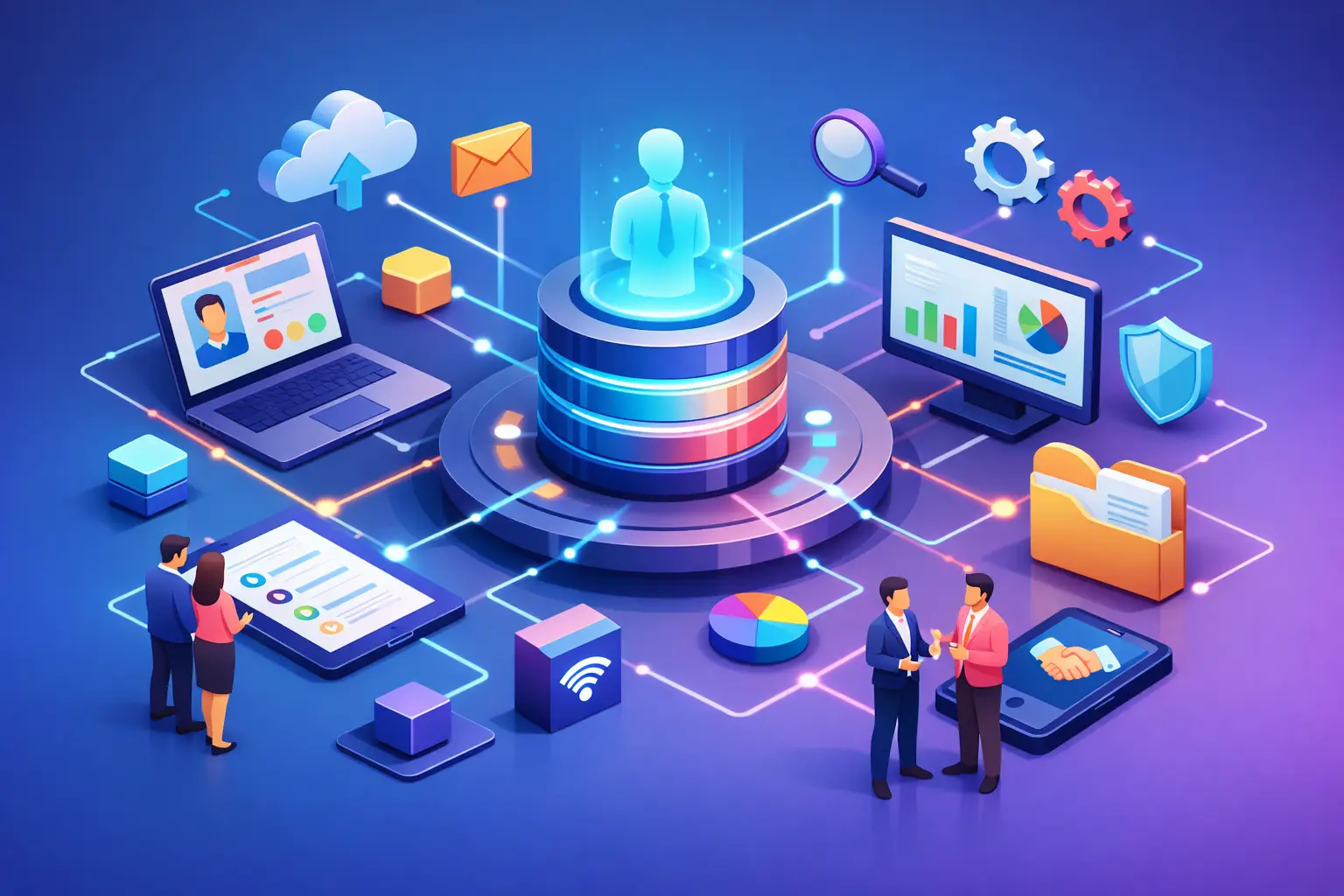
A payroll correction should not begin with three exports, a Slack message, and a search for the latest employee spreadsheet. Yet that is how many multi-country organizations still operate when employee records, time data, compensation changes, and local payroll rules live in separate systems. An employee data platform changes the operating model by treating workforce data as shared infrastructure rather than a collection of departmental records.
For HR, payroll, finance, and IT leaders, the value is not simply a cleaner employee directory. It is the ability to make a change once, apply the right controls, and trust that every downstream workflow is working from the same current information. That becomes critical when an organization adds legal entities, hires across borders, manages shift-based teams, or introduces AI into people operations.
An employee data platform is more than Core HR
Core HR systems typically establish the employee record: identity, employment details, manager, location, job, contract, and documents. That foundation matters, but it does not by itself resolve the operational disconnects that appear once data moves into timekeeping, payroll, benefits, performance, recruiting, and reporting.
A true employee data platform connects these domains through a shared data model and identity layer. The employee, position, legal entity, cost center, compensation plan, leave balance, schedule, and payroll result are not replicated into disconnected databases and reconciled later. They are related objects governed by common definitions, permissions, and workflows.
This distinction is practical. When a manager approves a promotion, the system should be able to route the change through the relevant approvals, update the employee’s role and compensation effective date, preserve the audit trail, and make the validated change available to payroll and workforce reporting. If each module depends on nightly files or manual administration, the organization still has a collection of applications, not a connected platform.
The goal is one source of truth, but that phrase needs precision. It does not mean every workforce tool must be replaced. Organizations often retain specialist systems for finance, recruiting, learning, or regional operations. It means the authoritative employee identity and core organizational context are clear, controlled, and available through reliable APIs, webhooks, and integrations.
Why fragmented people data becomes a business risk
Data fragmentation is often tolerated while a company operates in one country with a modest headcount. It becomes expensive as soon as employment models, legal entities, and payroll jurisdictions multiply.
Consider a new starter in Singapore. HR needs accurate personal and employment details. Payroll needs tax and social insurance treatment. Finance needs a cost center. IT needs an identity and access workflow. The employee’s manager needs visibility into onboarding tasks, leave, and schedule. If each team enters the same information independently, errors are not an exception. They are an expected outcome of the architecture.
The risk is higher for changes that carry financial or statutory consequences. A delayed termination can result in overpayment. An incorrect work location can affect tax handling. Missing overtime records can distort gross-to-net payroll. A compensation adjustment entered after a payroll cutoff may require off-cycle processing and additional reconciliation.
Fragmentation also weakens governance. HR may know an employee has changed roles, while the identity provider still grants prior access. Payroll may hold bank details that differ from the HR file. Finance may report headcount using a different definition from People Operations. These are not merely data quality issues. They affect access control, audit readiness, forecasting, and employee trust.
The architecture that makes workforce data usable
An employee data platform should be evaluated as an operating architecture, not as a feature checklist. The strongest systems combine a common data layer with the controls needed to run regulated, multi-country workforce processes.
A shared identity and data model
Every module needs to resolve to the same person, organizational structure, and employment relationship. This is what allows a change in Core HR to flow into payroll, time, rewards, and analytics without creating duplicate records.
The data model also needs effective dating. Workforce information is rarely static. Employees transfer entities, receive future-dated pay changes, move managers, take leave, and shift between employment types. A platform should retain what was true at a given point in time, not overwrite history and force teams to reconstruct it later.
Workflow controls that reflect real approvals
Employee data is not useful if anyone can change it without accountability. Role-based access control should define who can view, propose, approve, and execute actions based on role, entity, country, team, and data sensitivity. An HR administrator may manage job details, for example, while payroll owns bank information and Finance approves compensation changes above a threshold.
Each workflow should produce an audit trail: who initiated the change, what was modified, which approvals occurred, and when the record became effective. This is particularly important for payroll-affecting changes and for organizations preparing for internal or external audits.
Country-aware payroll data
Global workforce data is not standardized simply because it is stored centrally. Payroll must still account for local tax, social insurance, statutory leave, filing requirements, and bank-file formats. A usable platform pairs a global employee record with jurisdiction-specific country packs, rather than forcing teams to manage local rules in spreadsheets or disconnected providers.
This approach supports consistency without pretending that Singapore, New Zealand, Hong Kong, and Australia have identical compliance obligations. It also gives central teams clearer visibility while allowing local payroll requirements to remain correctly configured.
An open integration layer
No enterprise workforce environment is isolated. The employee data platform should support REST and GraphQL APIs, OAuth2, SAML SSO, webhooks, and governed integration patterns. These capabilities allow the platform to exchange data with systems such as NetSuite, Greenhouse, Okta, Slack, QuickBooks, and existing HCM applications without making custom exports the default operating process.
Integration quality matters as much as integration quantity. Ask whether data can move bidirectionally, whether events can trigger downstream workflows, how conflicts are handled, and whether access is logged. An integration that only exports a nightly CSV may solve a reporting need, but it will not support real-time operational decisions.
AI needs governed workforce context
AI is increasing the urgency of a unified data foundation. An AI assistant can draft an onboarding checklist or answer a policy question, but it cannot safely execute workforce actions if it lacks current context, permissions, and traceability.
For example, an HR leader may ask why headcount costs rose in a business unit. A useful AI agent needs access to approved compensation changes, new hires, overtime, leave patterns, entity structures, and payroll outputs. It also needs to respect role-based permissions so that a manager does not receive confidential compensation information outside their scope.
This is why AI-native workforce operations cannot be built on uncontrolled data copies. Governed AI agents should operate against approved sources, provide citations for answers, enforce regional data controls, and record actions in an audit log. Automation without these controls can accelerate errors and create new compliance exposure.
ZingKey is designed around this principle: one composable system where workforce records, payroll operations, and governed AI share a common foundation rather than relying on an AI layer bolted onto fragmented tools.
How to assess platform fit
The right employee data platform depends on the organization’s operating complexity. A company with one entity and a simple salaried workforce may prioritize speed of deployment and Core HR functionality. A company managing multiple countries, shift patterns, overtime, contractors, and statutory payroll obligations should place more weight on data architecture, local compliance coverage, and workflow governance.
During evaluation, focus on the paths where data changes create operational consequences. Test a new hire, cross-entity transfer, salary change, leave request, manager change, termination, and payroll correction. For each scenario, determine where the data originates, who approves it, which systems receive it, and how the organization can prove what happened later.
Also examine implementation ownership. Centralization does not mean every local team loses control. The better model combines global standards for identity, reporting, and security with country-level configuration for payroll rules and local processes. That balance is what allows a platform to scale without becoming either rigid or ungovernable.
The practical measure of success is simple: when a workforce event occurs, teams should know which record is authoritative, which workflow controls the change, and which downstream outcomes will follow. When that confidence exists, HR can move faster, payroll can operate with fewer exceptions, Finance can plan from current data, and IT can govern access without chasing duplicate identities. That is the foundation companies need before their next country launch, not after it.