What an HRIS API Integration Platform Must Do
An HRIS API integration platform connects payroll, people, and finance data with governed controls, real-time events, and audit-ready accuracy across APAC.
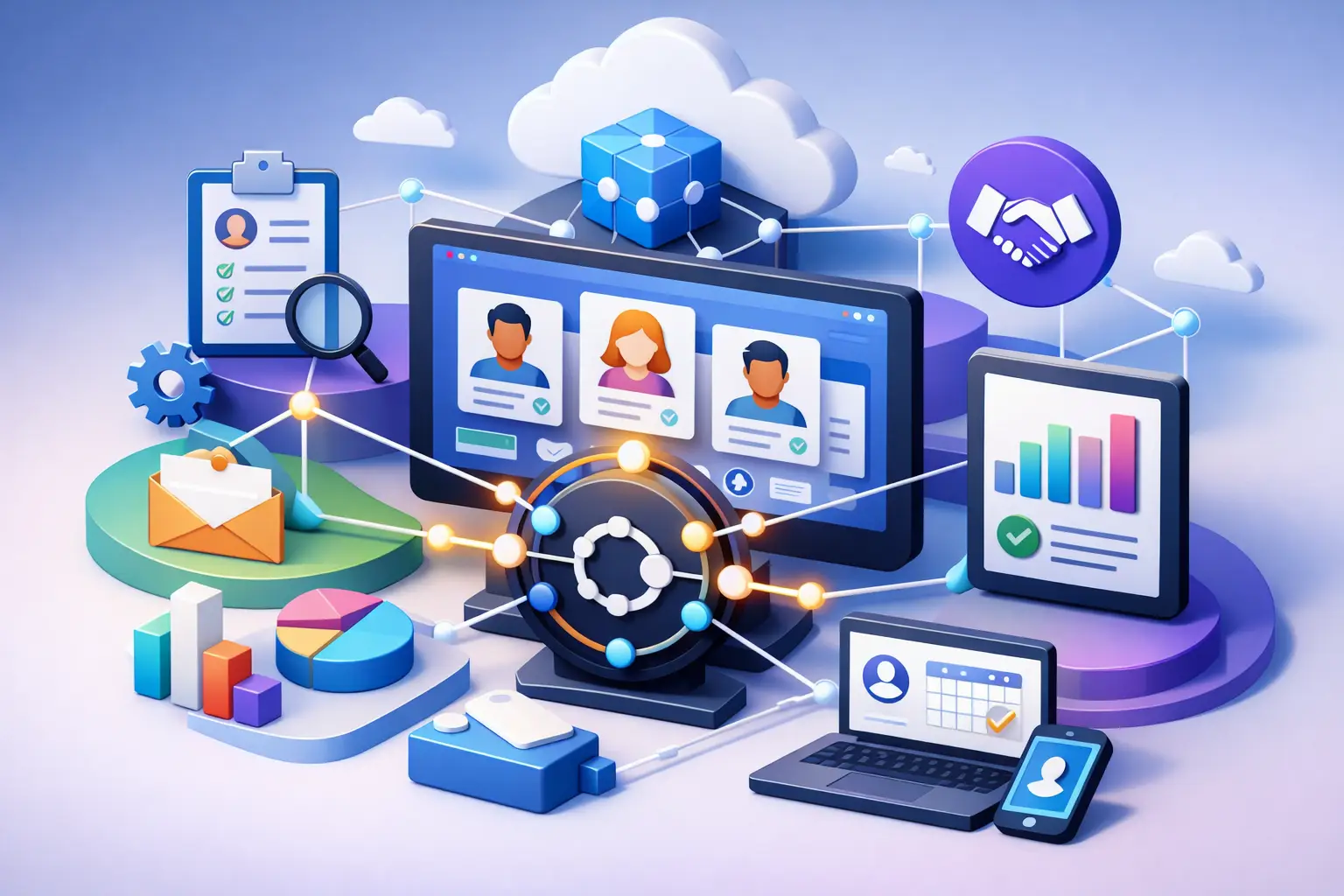
A payroll adjustment approved in HR should not wait for someone to export a spreadsheet, reformat a file, and upload it into finance. For companies operating across countries, that delay creates more than administrative friction. It creates payroll risk, inconsistent reporting, and uncertainty over which employee record is correct. An HRIS API integration platform is the operating layer that prevents those gaps by connecting workforce data, business systems, and controlled automation around one trusted identity.
The distinction matters. Many HR systems can exchange files or offer a few endpoints. A platform built for integration treats APIs, events, permissions, and auditability as core infrastructure. It supports the reality that HR, payroll, finance, IT, and talent teams all need the same workforce data, but do not need the same level of access or the same workflow.
An HRIS API integration platform is more than a connector
A connector moves data between two applications. An integration platform establishes the rules for how data is created, validated, shared, changed, and traced across the organization.
Consider a new employee joining a Singapore entity. The employee record may need to trigger provisioning in identity management, create a payroll profile, assign a cost center in finance, initiate onboarding tasks, enroll the employee in benefits, and publish a notification to a collaboration tool. If each action relies on separate imports or custom scripts, teams inherit duplicate records and inconsistent timing.
A well-designed HRIS API integration platform makes the employee and organizational record the authoritative source. Downstream systems receive the fields they need through documented APIs and real-time webhooks. Changes can be validated before they affect payroll or financial reporting. Every action can be attributed to a user, system, or approved automation.
This is especially relevant in APAC operations, where a workforce record often carries country-specific payroll and compliance requirements. Legal entity, work location, tax status, bank details, leave configuration, overtime eligibility, and statutory contribution settings are not generic fields. They affect gross-to-net payroll, reporting, and payment execution.
Start with the data model, not the integration catalog
Integration catalogs can look impressive while concealing a difficult architecture. The first evaluation question is not whether a vendor connects to a popular application. It is whether the HR platform has a shared data model that keeps the employee, job, manager, legal entity, compensation, schedule, and payroll data aligned in real time.
Without that foundation, integrations merely synchronize separate sources of truth. The same department change may be edited in Core HR, a payroll system, and an ERP. When records disagree, HR spends time reconciling data while finance questions labor costs and IT manages access against outdated roles.
A composable HR platform should model workforce data once and make it available across modules and external systems through controlled interfaces. This supports practical use cases such as sending approved headcount and compensation data to NetSuite, creating recruiter workflows from a Greenhouse candidate hire, or updating access groups in Okta when an employee changes role.
The data model also determines how well the platform handles history. HR and payroll decisions need effective dates. A manager transfer approved for next month should not rewrite the current reporting structure. A retroactive salary change may require payroll recalculation without obscuring the original approved rate. APIs should expose those records with sufficient context for downstream systems to process them correctly.
What good API coverage looks like
REST APIs remain a practical standard for operational workflows, while GraphQL can give developers more control over the fields and related records they retrieve. Both can have a place. The underlying requirement is consistent, documented access to the objects that run workforce operations.
An enterprise-ready API layer should support employee profiles, employment records, organizations, legal entities, jobs, compensation, time and attendance, leave, payroll inputs, approvals, documents, and reporting data. It should also provide stable identifiers. Names, email addresses, and job titles change. A durable worker ID and organizational ID make integrations more reliable over time.
Write access requires greater care than read access. A platform may appropriately allow an approved ATS to create a pre-hire record while restricting compensation changes to an internal approval workflow. The strongest architecture separates what a connected system can read, what it can propose, and what it can finalize.
Real-time events reduce operational lag
Scheduled synchronization has a role. Large reporting extracts and finance reconciliations may run nightly. But payroll-impacting changes, joiners, leavers, leave approvals, and access revocations often cannot wait for a batch process.
Webhooks allow connected systems to respond when a defined event occurs. For example, a completed termination workflow can notify IT to remove access, finance to stop expense authority, and payroll to prepare final-pay processing. A timecard approval can pass validated hours to payroll. A change to a worker’s manager can update the approval hierarchy in another business application.
Real-time design does not mean every field change should be broadcast everywhere. High event volume, duplicate delivery, and downstream failures need deliberate handling. APIs and webhooks should support idempotency, retries, versioning, error visibility, and clear event payloads. IT teams need to know whether a failed event was retried, ignored, or requires intervention.
For cross-border organizations, event timing should also reflect country operations. A late payroll input may have different cutoff implications in Singapore and New Zealand. Integration logic needs to respect the payroll calendar and approval state rather than simply pushing data as soon as a field changes.
Governance is part of the integration design
People data is sensitive by default. Compensation, bank details, government identifiers, performance records, and health-related leave information should not move through integrations because an API token happened to have broad access.
A credible HRIS API integration platform uses OAuth2 for scoped authentication and role-based access control to limit data by user, role, country, legal entity, and function. SAML SSO can centralize authentication for administrators, while API credentials need their own lifecycle controls, expiration policies, and rotation process.
Audit trails are equally essential. When payroll inputs change, teams need to see what changed, who initiated it, which system submitted it, when it was approved, and whether an automated action executed successfully. This is not only a security requirement. It is how HR, payroll, and finance resolve disputes without reconstructing events from emails and spreadsheets.
Regional data controls deserve the same attention. A company operating across APAC may need to apply data residency policies, minimize cross-border transfers, and ensure that external applications receive only the information required for a defined purpose. Integration architecture should make those controls enforceable rather than dependent on custom policy documents.
Payroll integrations need country-level intelligence
Payroll is where generic integration design often fails. Passing a salary value from HR to payroll is simple. Passing the correct taxable earnings, recurring allowances, overtime, leave effects, statutory deductions, retroactive adjustments, and bank-payment details is a different problem.
Country packs help turn workforce changes into payroll-ready inputs by applying jurisdiction-specific rules and payroll calendars. In Singapore and New Zealand, for example, organizations need payroll infrastructure that can account for local tax and social-insurance logic, statutory reporting, year-end requirements, and native bank-file formats. As companies add Hong Kong, Australia, or additional markets, the integration layer must preserve a common operating model without flattening country differences.
This is why payroll data should not be treated as a one-way export. Payroll results should return to the broader workforce record in a governed form, supporting finance journals, labor-cost reporting, compensation analysis, and employee self-service. The loop between HR, time, payroll, and finance needs to be controlled end to end.
Evaluate implementation as an operating model
The technical evaluation should include endpoint documentation, sandbox access, rate limits, webhook behavior, authentication, and error handling. But implementation succeeds or fails on ownership and data discipline.
Before building integrations, define the system of record for each critical object. Core HR may own employee identity and job data. Payroll may calculate final statutory outcomes. Finance may own chart-of-accounts structures. An ATS may own candidate data until hire. These boundaries prevent two systems from attempting to control the same field.
Then map exception handling. What happens when a cost center is inactive in the ERP but assigned to a new hire? What happens when an employee transfer is approved after the payroll cutoff? What happens when an identity-provisioning event fails? Mature teams design these paths before launch, with visible queues and named owners.
ZingKey approaches this as one composable system: shared workforce data, country-aware payroll operations, open APIs, controlled automation, and audit-ready governance. That architecture reduces the need to rebuild the operating model every time the business enters a new market or introduces another workforce tool.
The best integration program is not measured by the number of applications connected. It is measured by how confidently a company can act on a workforce change. When a manager approves a transfer, the right systems should receive the right data, at the right time, with a clear record of why it happened.