Workforce Orchestration Benefits Across Borders
Workforce orchestration benefits include cleaner data, accurate payroll, controlled automation, and faster decisions across countries, entities, and teams.
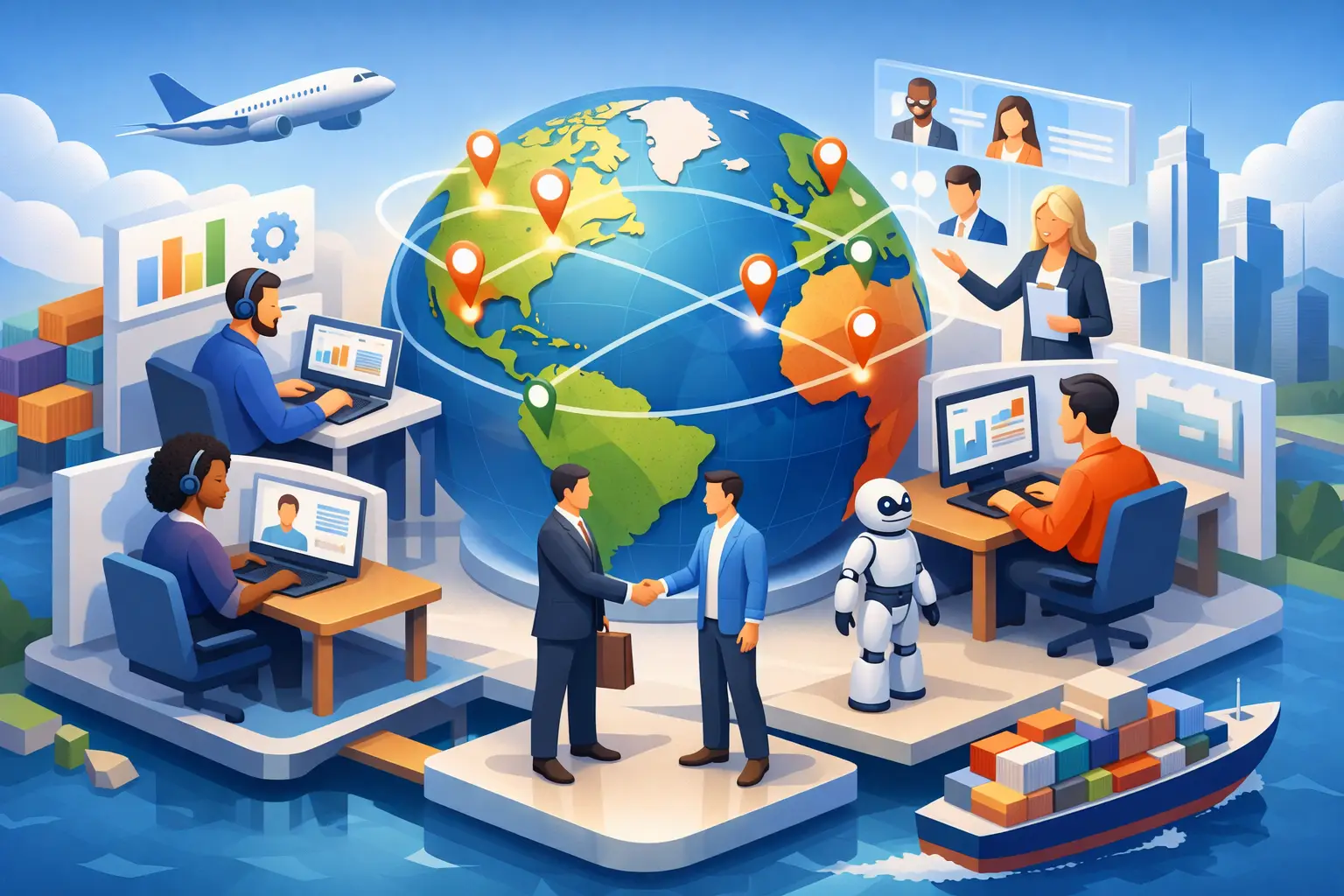
A late payroll correction is rarely a payroll-only problem. It may begin with an outdated employee record, an unapproved schedule change, a leave balance that did not sync, or a local statutory rule managed outside the system of record. Workforce orchestration benefits address that chain of failure by connecting the workforce data, policies, approvals, calculations, and actions behind daily operations.
For companies operating across countries, orchestration is not a new label for HR automation. It is the operating model that ensures a change made in one workforce process is reflected where it needs to be reflected next: in time records, pay runs, manager approvals, benefits, reporting, and compliance documentation. The objective is controlled execution across the employee lifecycle, not simply fewer clicks.
What workforce orchestration means in practice
Workforce orchestration coordinates the people, data, systems, and workflows involved in managing employees. A new hire, for example, should not trigger a chain of manual emails between HR, payroll, IT, finance, and the manager. The employee record should establish the correct legal entity, location, job, compensation, work pattern, permissions, and downstream tasks from a shared data model.
This distinction matters because many organizations have automated individual activities without connecting them. They may have a strong HRIS, a separate time tool, local payroll providers, a recruiting platform, and spreadsheets for compensation or headcount. Each system can perform its assigned task. The operational risk appears between them, where ownership is unclear and data is copied, delayed, or changed without a traceable control.
An orchestrated model creates a single identity and organizational layer across modules. It applies workflow rules to the shared record, routes work to the right approver, enforces local policies, and records each action in an audit trail. APIs, webhooks, and integrations remain important, but they support the operating model rather than becoming a substitute for one.
Where workforce orchestration benefits are most visible
Payroll becomes a controlled downstream process
Payroll is often the most visible outcome of fragmented workforce operations. Payroll teams receive late files, reconcile incompatible fields, rekey employee changes, and investigate discrepancies that began weeks earlier in another system. The result is a high-effort payroll cycle that still carries material compliance and employee trust risk.
With orchestration, payroll consumes approved workforce events rather than a collection of exports. A promotion updates compensation and effective dates. A leave event updates the relevant balance and pay treatment. Approved overtime moves from scheduling and attendance into the payroll calculation with the correct policy context. When country packs apply local tax, social insurance, statutory leave, and year-end rules, payroll teams can validate exceptions instead of rebuilding compliance logic for every jurisdiction.
This does not mean every payroll decision should be automatic. Retroactive pay, off-cycle adjustments, and unusual allowances may require expert review. The benefit is that exceptions are visible, attributable, and governed rather than buried in email threads or spreadsheets.
Managers act on current workforce facts
Managers make operational decisions every day: approving time, adjusting schedules, confirming leave, opening headcount, and reviewing performance. Those decisions weaken when employee data differs across systems or when approvals arrive after the relevant deadline.
Orchestration gives managers role-appropriate access to the same current workforce record used by HR and payroll. They can see the data required to make a decision without receiving unrestricted access to compensation, medical, or regional payroll information. Role-based access control matters here. It enables speed without treating data governance as an afterthought.
For distributed teams, the value is especially clear. A manager in Singapore may supervise employees employed through different entities or work with colleagues in New Zealand and Australia. A consistent approval experience can coexist with country-specific rules for public holidays, overtime, leave, and payroll. Standardizing the platform does not require standardizing every local policy.
Finance receives a more reliable labor picture
Labor cost reporting is only as credible as the underlying people, time, and pay data. If headcount is maintained in one system, compensation in another, and payroll results in local files, finance spends too much time reconciling the past. Forecasting becomes a manual exercise, and leaders debate whose numbers are correct.
A shared data model turns workforce information into a more dependable planning input. Finance can analyze headcount by legal entity, department, location, cost center, employment type, and manager using consistent definitions. Approved compensation changes and payroll results can be connected to the same organization structure, improving variance analysis and budget accountability.
The trade-off is that data definitions must be designed carefully. A global job architecture, cost center hierarchy, and effective-dating rules require governance. Orchestration exposes weak operating definitions; it does not repair them automatically. Companies that establish those controls gain reporting that can support decisions rather than merely explain discrepancies.
Compliance is built into the workflow
Cross-border workforce compliance is not limited to filing payroll taxes. It includes employment records, leave entitlements, overtime rules, approval controls, statutory reporting, data access, document retention, and local payment requirements. Compliance failures frequently arise when a correct rule is applied too late or to incomplete information.
Orchestration brings the control point forward. The system can require the right fields before a worker is activated, apply country-specific payroll logic based on entity and work location, and preserve evidence of approvals and changes. Native bank-file formats, statutory reports, and local payroll configurations reduce the number of handoffs where critical data can be altered.
For regulated environments, traceability is as important as calculation accuracy. HR, finance, IT, and auditors need to know who changed a record, when it changed, what approval applied, and which policy or source informed the action. An audit trail turns that investigation from a forensic exercise into a normal operational capability.
AI works better when it can act within controls
AI can answer policy questions, prepare workflow drafts, surface exceptions, and reduce the administrative burden of workforce operations. But a generic AI layer connected loosely to HR data introduces new risks: unsupported answers, excessive access, unclear accountability, and actions that cannot be reconstructed later.
The stronger model is AI-native workforce orchestration. Private AI agents operate against approved sources, respect regional data controls and role-based permissions, cite the information used, and log their actions. An agent may prepare an onboarding checklist, identify missing payroll data, summarize leave anomalies, or help a manager locate a policy. It should not bypass approval rules or independently make a high-impact compensation decision.
This approach gives teams a practical boundary. Use AI to accelerate retrieval, analysis, and repeatable execution. Keep human authorization for consequential changes, especially where payroll, legal status, employee relations, or sensitive personal data are involved. Governed automation scales confidence as well as capacity.
The architecture behind durable results
Workforce orchestration is often mistaken for a collection of integrations. Integrations are necessary, particularly for organizations using systems such as finance platforms, identity providers, recruiting tools, and collaboration applications. Yet an integration-heavy environment can still be fragmented if each application owns a different version of the employee.
The architectural requirement is a central workforce record with shared identity, effective-dated organizational data, consistent permissions, and a common workflow engine. From there, specialized capabilities such as Core HR, time management, payroll, rewards, talent, and analytics can operate as parts of one composable system.
This is why platform evaluation should extend beyond feature checklists. Buyers should ask whether a job change flows into payroll without manual reentry; whether an approval has an immutable record; whether local country rules can be configured and maintained without creating a separate data silo; and whether APIs support both inbound and outbound events. SAML SSO, OAuth2, REST and GraphQL APIs, webhooks, and detailed logging are operational requirements, not technical decoration.
For the planning layer specifically, a structured workforce-planning feature matrix helps buyers separate foundational headcount and cost controls from capabilities that become useful only at scale.
ZingKey is designed around this model: one codebase, a shared data and identity layer, country-pack payroll, and governed AI that can execute workforce work within defined permissions and audit controls.
How to prioritize an orchestration program
Start with the workflows where a workforce event crosses the most systems or creates the greatest financial and compliance exposure. For many companies, that means hire to payroll, time and overtime to payroll, employee changes, leave administration, or offboarding. Map the actual flow, including spreadsheet handoffs, local workarounds, approval gaps, and rekeying. The process diagram is often more revealing than a system inventory.
Next, establish ownership for master data. Decide which system owns legal entity, employee identity, job, manager, location, compensation, bank details, time rules, and payroll status. Define effective dates and correction rules so that historical reporting and retroactive payroll calculations remain reliable.
Then automate in layers. First standardize the data and approvals. Next connect downstream calculations and notifications. Add AI agents only after source data, permissions, and audit expectations are clear. Trying to automate a poorly defined process simply distributes the confusion faster.
Measure results in operational terms: payroll corrections per cycle, approval cycle time, manual data touches, time to provision a new hire, late statutory filings, report reconciliation effort, and time spent resolving workforce data disputes. These measures show whether the platform is changing execution, not just consolidating screens.
The most valuable workforce operating model is not the one with the most automation. It is the one where every material workforce event has a clear source, an accountable owner, the right local rule, and a traceable path to action. That is how growth across borders becomes controlled rather than increasingly complicated.